Facebook Twitter Instagram
  • Home
  • About Us
  • Arts Hub
    • Architecture
    • Fiction
    • Films
    • Life Writing
    • Music
    • Poetry
    • Theatre
    • Visual Arts
  • Culture Hub
    • Clothing & Fashion
    • Cultural Commentary
    • Eating & Drinking
    • Education
    • Festivals/ Events
    • Religion
    • Science & Technology
    • Sport
    • TV, internet and other media
  • Contributors
  • Books
  • E-books
  • Support Us
0 0
Shopping cart (0)
Subtotal: £0.00

Checkout

Free delivery in the UK.

  • Home
  • About Us
  • Arts Hub
    • Architecture
    • Fiction
    • Films
    • Life Writing
    • Music
    • Poetry
    • Theatre
    • Visual Arts
  • Culture Hub
    • Clothing & Fashion
    • Cultural Commentary
    • Eating & Drinking
    • Education
    • Festivals/ Events
    • Religion
    • Science & Technology
    • Sport
    • TV, internet and other media
  • Contributors
  • Books
  • E-books
  • Support Us
Facebook Twitter Instagram
0 0
0 Shopping Cart
Shopping cart (0)
Subtotal: £0.00

Checkout

Free delivery in the UK.

Return to previous page
Home Blog Arts Hub Films

Poverty at the Movies

Poverty at the Movies

24 November 2024 /Posted byAlan McGuire
Post Views: 2,988

Being able to afford something, or for a child not being able to have something, is where the narrative of poverty begins. However, it has been obscured by the liberal idea of progress – the idea that some people are more advanced than others because that’s how nature has played out. This discourse continues to how we assess poverty and judge the poor.For many, poor equals brown or black people from Oxfam adverts; many people over the world live on less than two dollars a day:

In 2021 an estimated 698 million people, or 9% of the global population, are living in extreme poverty – that is, living on less than $1.90 a day. Over one-fifth of the global population live below the higher $3.20 poverty line (1,803 million people), and over two-fifths (3,293 million people) live below $5.50 a day.

So what do we mean when we talk about poor people with no money in richer Western countries? For many ‘poor’ in the West means that they have ended up there for a few reasons. It could be that they have not worked hard enough, aren’t talented, or in the less reactionary of opinions, it comes down to bad luck. Falling on hard times as they say. A truly personalised and unique case often for everyone. It’s framed as a moral failure of the person or those around them rather than a societal issue.

I, Daniel Blake is a social realist film by Ken Loach that shows the realities of the situation for benefits claimants in the UK but often leaves people questioning if it has been laid on too thick. Does that mean the problems don’t exist though? As you watch a close-to-retirement Daniel jump through the faceless hoops of the state you gain a sense of sadness for the person stuck in the system, a sense of indignation. It’s not his fault he has an illness which means he gets lost, coming up against faceless apparatchiks to get his 90 quid to last him two weeks. 

Yet for every social realist film that attempts to combat this matter we have serial blockbusters like Star Wars. In episode seven, The Force Awakens, we see Rey scavenging for food on a sandy Jakku. She is on a dead-end planet and is poor in many ways. For Rey to end up here it was a moral decision made by her parents to abandon her. She had been placed there for reasons out of her control. We see her making her way off the planet because she has a bigger mission beyond her own story, but what if there was no bigger story? What if Rey just got bored of being a scavenger? I mean we see her stuck inside a system, selling what she finds to get inflatable bread and green biscuits. She even tried to stay out of obligation.

Star Wars is representative of a widely held liberal view that poverty – and living in that state – has a moral kernel as opposed to a systematic one. As if we are all like Rey, free to choose when to leave but first we have to find our bigger calling, work hard and try harder. A more obvious version is The Wolf of Wall Street where we see Leonard de Caprio’s character force his way to the top of the American food chain with wit, balls and talent. Success is yours, if you want it. 

Maid on Netflix is an interesting synthesis of the two. A woman decides to leave her home with her child because of domestic abuse. This is not a clear-cut decision for everyone but does highlight issues around various forms of abuse in relationships. She goes from being poor to being poorer, and is thrown into a world of food stamps and government aid programs. She has to get a job as a maid to claim any help. 

The way we see Margaret Qualley portray the effects of poverty on her mental health is refreshing, as a lack of money can make you so stressed and have the same brain capacity as somebody who is intoxicated with alcohol. Furthermore, the portrayal of the distance that is created between you and your close ones when you suffer from depression is also noteworthy. But the series also highlights practical issues around documentation, rights, money and precarious work, all of which the poor person has to negotiate on top of the stress of having no money and to provide for a child in a hostile and cold environment – this is on a material and spiritual level.

I’m not sure how superior a member of the royal family would feel in these circumstances. The series shows the world is not made for the poor. The poor have to navigate around the world. This isn’t easy when you have an unstable home life, no money and no self-esteem to match. I found myself rewatching this series again, 3 years after it was initially released. Thinking about how I felt the first time and comparing it to now, I feel that the world is even more hostile to anyone who is not ‘making it’ or ‘hustling’ to make ends meet. The entrepreneurship culture has darkened the internet and in turn our workplaces and classrooms.

The series works well highlighting various issues related to abusive relationships, in-work poverty, mental health both as a person and carer, and alcoholism. One of the major contradictions is that it was written by someone who has made it on her own talent. This isn’t a bad thing, and this is something to be praised as the writing is phenomenal, but it also could be used to support the idea that if you work for it you can achieve it. Sadly, not everybody will write a Netflix series.

Relative poverty or in-work poverty is not because of a lack of will or a moral failing. If anything, it is a moral failing on a society level as we continue to use a broken (for the poor) capitalist economic system that forces people to stay in abusive relationships and gives them little help to alleviate the stresses of living in poverty. Pull yourself up by the bootstraps they say, but what if you need to buy new laces?

Share Post
  • Twitter
  • Facebook
  • Pinterest
  • Mail to friend
  • Linkedin
  • Whatsapp
Two poems for students, by Jen...
Black History Month: Holding t...

About author

Avatar photo

About Author

Alan McGuire

Alan McGuire is an Associate Editor at Culture Matters. He is a former mental health nurse from Swindon, lives in Madrid, and is active in both Spanish and British politics. He has had poetry and cultural commentary published on Culture Matters, the Sideways Poetry Magazine, Grass and Ink, Sweat & Tears, the Huffington Post, the Local, Madrid No Frills, Naked Madrid, Mundo Obrero and The Morning Star. He is also the founder and co-host of The Sobremesa Podcast, which explores contemporary culture, history and politics on the Iberian peninsula. His first poetry pamphlet 'The Last Days of Alicante' is out in 2025.

Other posts by Alan McGuire

Related posts

Arts Hub
Read more

Exploring ‘The Silent Run’ by Marta Bergman: A Standout at This Year’s Cairo Film Festival

Posted byRita Di Santo
Post Views: 677 In cinemas late November/early 2026 By Rita Di Santo With a captivating poetic opening, director Marta Bergman chronicles the journey of a... Continue reading
Arts Hub
Read more

The 46th Cairo Film Festival: Review of ‘One More Show’

Posted byRita Di Santo
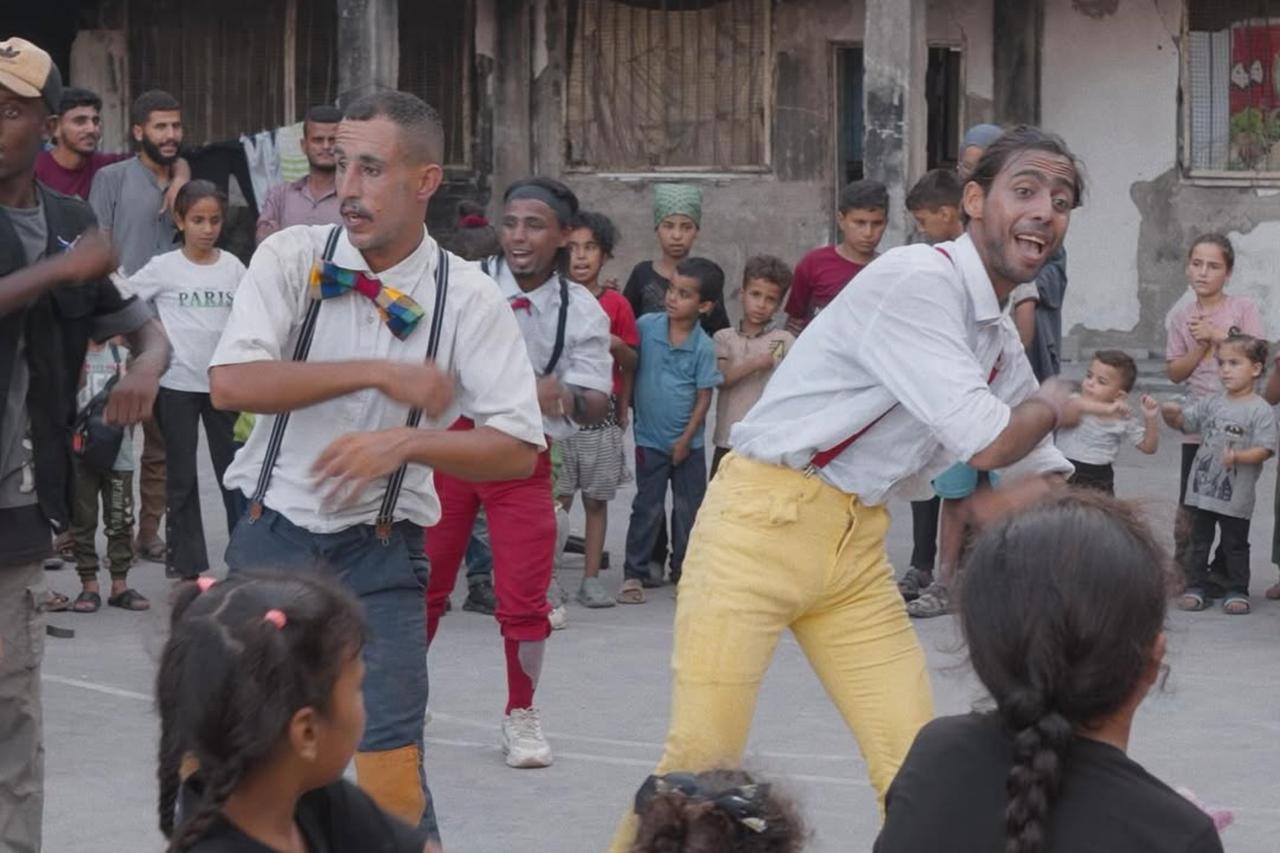
Post Views: 434 The Free Gaza Circus By Rita Di Santo As Israeli airstrikes in Gaza continue, claiming lives and escalating tensions following the ceasefire—a... Continue reading
Arts Hub
Read more

An incisive critique of Gilded Age capitalism: ‘The House of Mirth’ by terence Davies

Posted byAlan Price
Post Views: 329 DVD and Blu-Ray from BFI By Alan Price “Why can one never do a natural thing without screening it behind a structure... Continue reading
Arts Hub
Read more

Gaze, identity and memory: Review of “Portrait of a Lady on Fire”

Posted bySrijani Dutta
Post Views: 2,135 By Srijani Dutta The film “Portrait of a Lady on Fire” is a romantic movie that celebrates the homosexual love and sexual... Continue reading
Cultural Commentary
Read more

Our Culture: RIP British Working-Class Cinema (1935 – 2025)

Posted byBrett Gregory
In our ongoing Our Culture Series, we examine how art and media reflect, and too often distort, the realities of working-class life in Britain. In... Continue reading

Categories

  • About us
  • Architecture
  • Arts Hub
  • Clothing & Fashion
  • Cultural Commentary
  • Culture Hub
  • Eating & Drinking
  • Education
  • Festivals/ Events
  • Fiction
  • Films
  • Life Writing
  • Life Writing
  • Music
  • Poetry
  • Religion
  • Round-up
  • Science & Technology
  • Sport
  • The 1917 Russian Revolution
  • Theatre
  • TV, internet and other media
  • Visual Arts
Recent Popular

Rafts of Afflatus: A Review of From ...

28 January 2026 Comments Off on Rafts of Afflatus: A Review of From Here To There – 101 Poems on African and African Diasporic Migration

Poetry soaked in blood: ‘The face before ...

28 January 2026 Comments Off on Poetry soaked in blood: ‘The face before you’ by MOHAMMED MOUSSA

Words of Sympathy

26 January 2026 Comments Off on Words of Sympathy

A beginner’s guide to 21st century American ...

25 January 2026 Comments Off on A beginner’s guide to 21st century American English

Contributors to Culture Matters

17 October 2017 Comments Off on Contributors to Culture Matters

The radical imagery of William Blake

2 March 2021 Comments Off on The radical imagery of William Blake

Music and Marxism

7 June 2016 Comments Off on Music and Marxism

When the Council owns the building you ...

1 December 2024 Comments Off on When the Council owns the building you live in

Tags Cloud

bbc Black Lives Matter Boris Johnson Brecht communism Covid19 Cultural democracy cultural struggle Donald Trump English Revolution Gaza Gaza genocide Genocide in Gaza George Orwell Hitler IDF Iran Israeli bombing Israeli war crimes jeremy corbyn Jesus Karl Marx Keir Starmer Levellers Marx marxism Miners' Strike Miners' Strike 1984 Netanyahu Netflix Palestine Action poetry Raymond Williams Reform UK refugees Rishi Sunak Russian Revolution Shakespeare socialism Spanish Civil War Starmer Starvation in Gaza by Israel Trump Ukraine william morris

Search

Print

follow us on our Social Networks

Facebook Twitter Instagram Youtube

Copyright © 2016 - 2024 Culture Matters Co-operative Ltd; FCA Registration No: 4347; Registered office: 30 Glenbrooke Terrace, Gateshead, NE9 6AJ. All rights reserved.

Home
Support Us
Books